


What is Skimore?
With the Skimore membership, you get free access to all our facilities, both summer and winter. Enjoy everything from skiing and tobogganing to cycling and climbing parks, all year round!
KNØTT
Knøtt
0 - 6 år
119,- /mnd
(1 428,- per år)
7 ÅR OG OVER
Junior, voksen, senior
7 - 79 år
289,- /mnd
(3 468,- per år)
FAMILIE
Inntil 2 voksne og 3 barn t.o.m
24 år i samme husstand
799,- /mnd
(9 588,- per år)


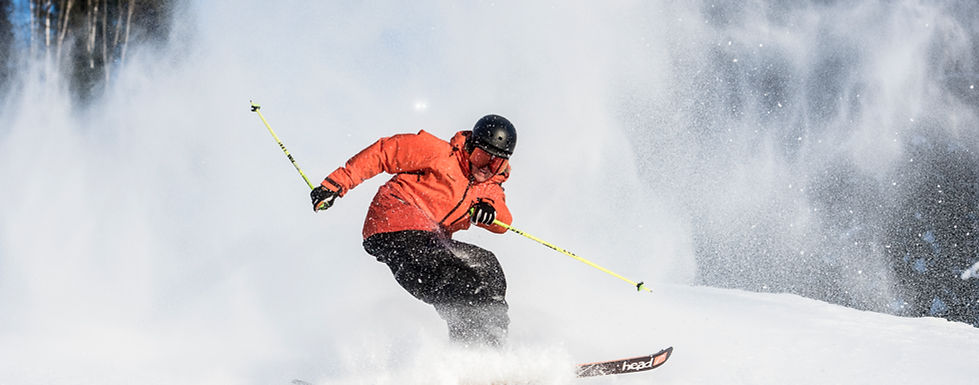
Safety rules
Injury Prevention Work at ALF
Although the scope and risk of injuries at alpine resorts is very limited, any accident is no less tragic for those affected. Every accident is therefore one too many. This is the overarching principle behind our work on ski safety.
Safety on Lifts
Regarding lift transport, the Norwegian Railway Authority (Statens Jernbanetilsyn, SJT) supervises and monitors cableways in Norway.
Safety on Slopes
Alpine resorts have a responsibility to ensure that visitors can safely descend the slopes without injury. However, it is important to emphasise that skiers themselves are responsible for avoiding injury to themselves or others by adjusting their skiing according to the 10 International Ski Rules. ALF’s alpine safety rules are based on these and were last revised in 2016.
The Norwegian Directorate for Civil Protection (DSB) serves as the supervisory authority and monitors the work of alpine resorts.
Causes of Injuries and Preventive Measures
Our injury investigations show that the majority of injuries are caused by the skier themselves.
Most accidents are related to personal falls. Causes include equipment errors, insufficient skills, inadequate physical fitness, and often a clear disregard for the 10 Alpine Safety Rules. Injury statistics show that only a small percentage of injuries result from collisions with objects, a cause where the resort may be involved in determining contributory factors.
Based on this, ALF’s preventive work focuses on two main areas:
- Attitude-shaping measures aimed at the public to address the primary cause of injuries.
- Measures aimed at resorts to make them even safer.
Attitude-Shaping Measures for the Public
Free Helmet Loan
Studies conducted in Hemsedal estimate that a significant proportion of head injuries could have been avoided or mitigated by wearing a helmet.
In collaboration with Gjensidige, ALF has distributed thousands of helmets for free loan at Norwegian alpine resorts, amounting to several hundred thousand “helmet days.” Other insurance companies also contribute positively, and most resorts have purchased helmets themselves. In several resorts, children under 7 ski for free if wearing a helmet.
Our surveys show that 85% of skiers use helmets.
Ski Etiquette in Alpine Slopes
Another important preventive measure is providing information about, and enforcing, the 10 international Ski Etiquette Rules. Had these rules been followed, the number of injuries could have been significantly reduced.
The Alpine Safety Rules also provide ski patrols with the best basis for effective supervision on the slopes. ALF has developed dedicated safety signs for terrain parks.
We also recommend that members ensure snowboarders have a proper leash attached to the knee and long enough to secure the board to the body during transport.
Measures Directed at Resorts
Safety Plans
In 1992, ALF developed a template for a Safety Plan in alpine resorts as a key tool in injury prevention. The plan includes maps of all slopes so that injuries can be registered at the locations where they occur, providing a solid basis for preventive measures based on injury location, frequency, and type. In addition, all safety installations must be mapped in a similar way.
We regularly remind member resorts of the importance of maintaining a Safety Plan.
Responsibility and Safety on Slopes
ALF has published a booklet titled “Responsibility and Safety on Slopes”, covering both the skier’s and the resort owner’s responsibilities in marked slope areas. It also addresses safety measures required of resort owners in both marked slopes and off-piste areas.
Internal Control System for Slopes
ALF has developed an internal control system for slopes, including ongoing risk assessments as a basis for preventive measures.
Safety in Training and Competitions
ALF has published a booklet to improve safety in training and competitions, covering responsibilities of both resort owners and trainers/organisers, as well as measures required to prevent accidents.
Ski Patrol Training
For several years, ALF has conducted training courses for ski patrol personnel. The patrol’s duties include both assisting injured individuals and preventing injuries. The preventive aspect has become an increasingly important part of the ski patrol’s work. The curriculum has been expanded to include safety measures, signage, and padding, which are crucial parts of resort safety management.
Avalanche Rescue Plans
Because timing is critical in saving lives, it is vital that resorts can initiate a preliminary search before other rescue teams arrive. Based on experience from training courses, ALF has developed a proposed content outline for avalanche rescue plans.
Off-Piste Responsibility
ALF addresses responsibilities related to off-piste skiing in the booklet “Responsibility and Safety on Slopes”.
Avalanche Warning System
In collaboration with NVE, a system for avalanche warnings (danger scale for snow avalanches) has been established.
Technical Training
- ALF has developed written inspection and maintenance routines for lift operations to ensure proper follow-up of control and maintenance work.
- ALF organises annual operations manager courses and certified training for grooming machine operators. The SJT is responsible for the operations manager examination.
Recommended Safety Rules
- ALF members have access to recommended guidelines, internal control systems, and manuals for safety management to operate in accordance with industry recommendations and applicable regulations.
Safety Committee
ALF has a dedicated Ski Safety Committee that continuously addresses matters affecting ski safety at alpine resorts.
Conclusion
The goal of injury prevention work is to reduce the number of accidents. We have a clear moral responsibility to prevent human suffering, and ensuring safe resorts is the best way to increase demand for alpine skiing.
Alpine skiing inherently involves speed, excitement, and challenges at different levels, and therefore always carries some risk. Because it is impossible to reduce this risk to zero without removing the very basis of alpine skiing, a certain level of risk must be accepted.
The person best positioned to control this risk is the skier themselves. Skiers must be trained to take responsibility for their skiing, both for themselves and others. Neither industry preventive measures nor new rules and controls alone will be sufficient to prevent injuries in alpine ski slopes in the future.